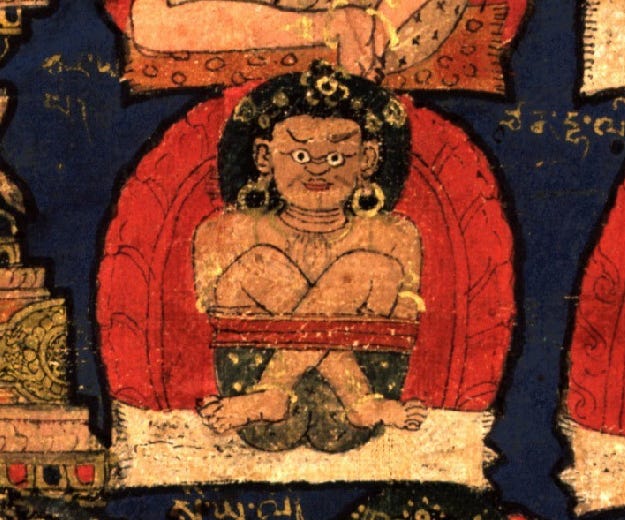
Fire-Pit Posture

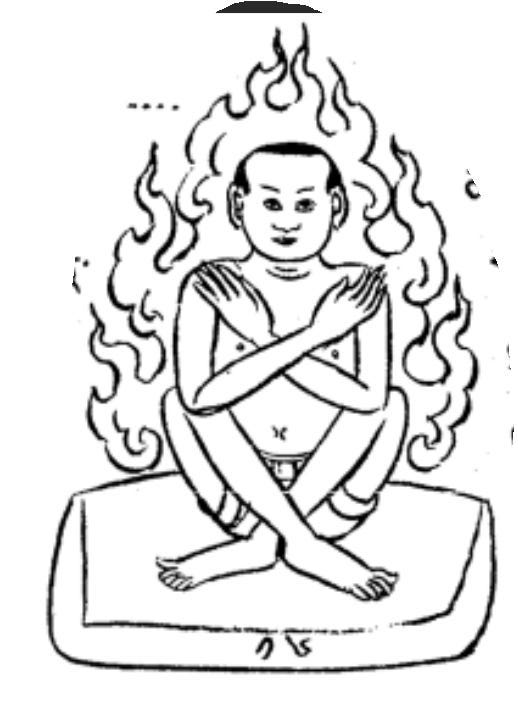
Fire-Pit Posture
The Fire-Pit Posture is used to generate heat more rapidly in the body, particularly in cold conditions and in the practice of tummo. It is called “fire-pit” (Tib. me thab, Skt. Agnikunda) because the posture functions like a hearth, serving as the base that supports and contains the fire of tummo.
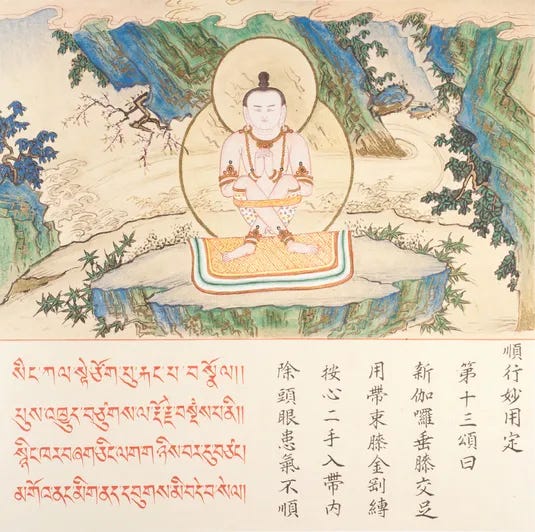
The full name of this posture is “Strapping the Six Fire-Pits” (me thab drug ’ching ba or thab ‘gal). It is referred to as “six fire-pits” because the arrangement of the arms and legs forms six triangular shapes (trikoṇa / gru gsum), resembling the structure of a traditional fire-pit.
The term “strapping” indicates how the posture is secured: the tripod structure formed by the legs and buttocks is either bound using a yoga strap or held firmly in place by the arms, which themselves function as a strap.
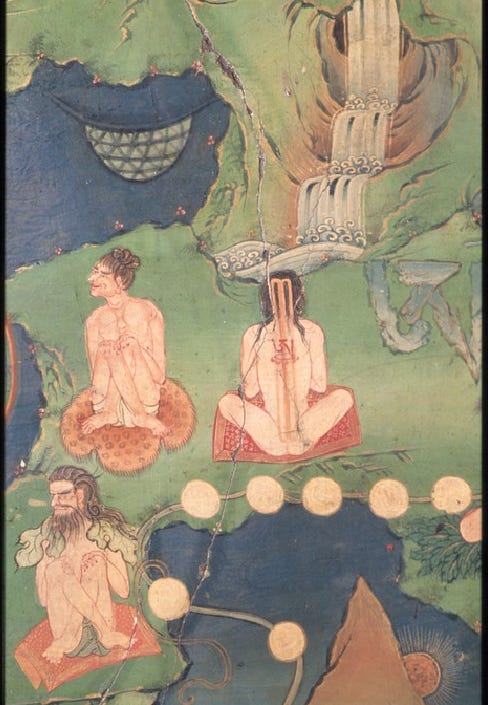
Formation of the Posture
This posture is built upon the foundational sevenfold posture [look at previous post]: the spine is kept straight, the shoulders drawn slightly back, the neck slightly bent, and the tongue resting against the palate. The distinguishing features lie in the specific arrangement of the arms and legs, together with the use of a strap to stabilise the lower body.
Legs
The Tibetan term for this leg position is tsog pu (“knees held upright”). The legs are crossed, typically with the left leg inside and the right outside although a few sources mention the reverse arrangement. The knees are raised and held upright, and the buttocks and the feet remain firmly planted on the ground like a tripod.
Yoga Strap
A yoga strap is used to secure and maintain the position of the legs. It is tied around the waist and looped around the lower shins, holding the structure of the posture firmly in place.
Arms
There are few variations:
First variation: The elbows rest on the corresponding knees, while the arms cross so that each hand is placed on the opposite shoulder.
Second variation: The arms themselves function as a strap, encircling and holding the knees in position by clasping or joining together.
Third Variation: The hands are placed below the navel in dhyāna mudrā: the right hand rests upon the left, both palms facing upward, with the thumbs gently pressing one another.
Fourth variation: Placing the hands on the adjacent knees.
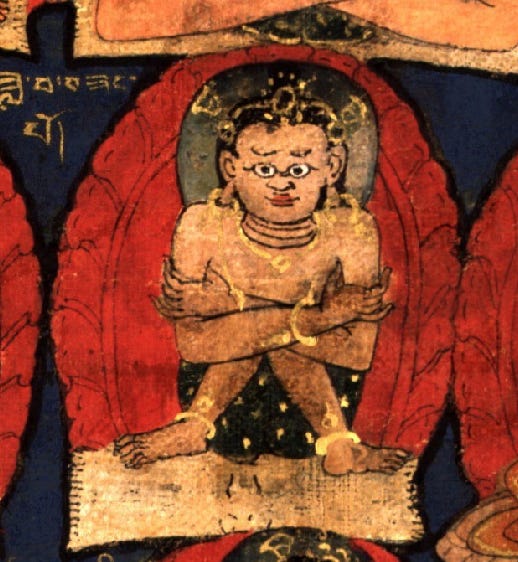
When It Is Used
This posture is generally employed at night, particularly for the rapid generation of inner heat in cold conditions and in the practice of tummo. During the day, the vajra cross-legged posture is more commonly adopted in Tummo practice.
Function of the Posture
(From tummo practice based on the four nāḍī-cakras associated with Sakya tradition)
Legs:
Cross the legs at the ankles by wrapping the right leg around the left, and secure them with a yoga belt. In this way, the lower vāyu (apāna-vāyu) is naturally restrained.Hand placement:
Place the hands in dhyāna mudrā at the pubic hairline and gently press the thumbs together. This is said to open the lower mouth of the avadhūtī [central] channel. An analogy is given: like a fish opening its mouth when touched at the forehead. Pressing the thumbs below the navel also helps to generate heat more rapidly.Spine:
Keep the back straight. This helps prevent disorders arising from obstructed or trapped vāyu [in the channels].Neck:
Bend the neck slightly, like an iron hook (elephant goad). This supports control of the upper vāyu (prāṇa-vāyu) and assists in directing it downward below the navel [after inhalation].Anus:
Leave the anus relaxed. This helps reduce potential adverse effects of the practice.