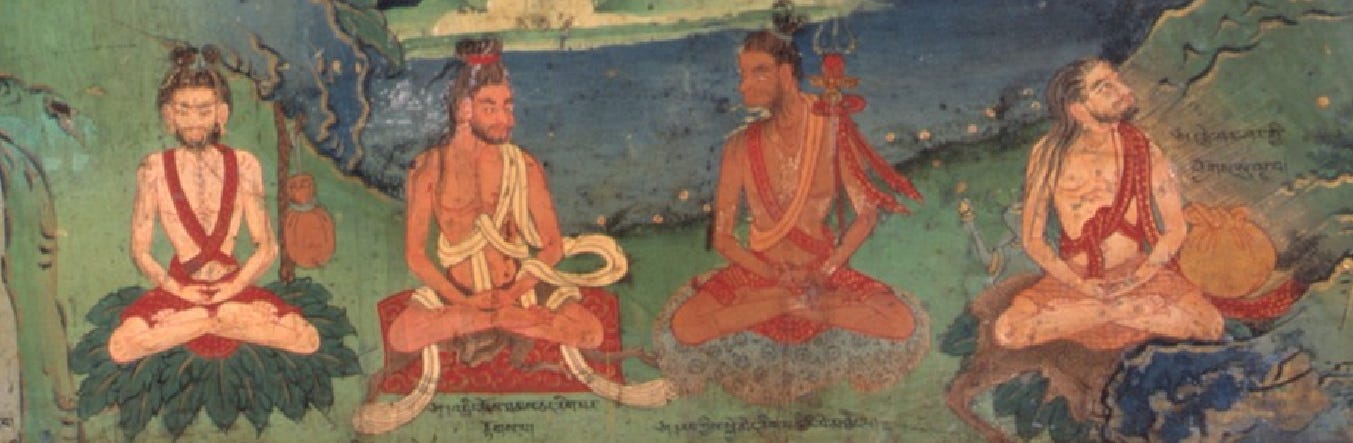
Sevenfold Posture: The Foundational Sitting Posture for Meditation and Yogic Practice

Introduction
This post presents Vairocana’s posture of seven distinctive features, a classical seated posture widely used in Tibetan Buddhist meditation and yogic practice. It explains the underlying principle of lus gnad and how specific bodily configurations influence the subtle channels, vital airs, and vital essences. The discussion also outlines the functional role of each component of the posture, particularly in relation to the regulation of the five primary vāyu and the arising of non-conceptual wisdom (nirvikalpa-jñāna). Practical instructions for forming each aspect of the posture are also provided.
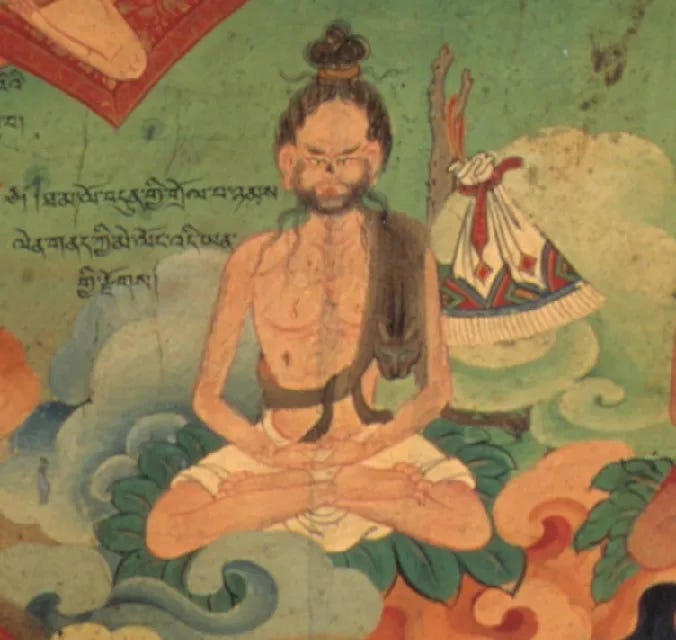
Sevenfold Posture of Vairocana
Vairocana’s Posture of Seven Distinctive Features is a classic and widely recognised seated posture, applied in both meditation (such as Śamatha and Vipaśyanā) and yogic practices (such as Tummo and Ṣaḍaṅga Yoga). Although minor variations particularly in the positioning of the hands and gaze occur depending on the specific practice (for example, vajra-fist hand positions or an upward or forward gaze), its essential structure remains consistent. It is also sometimes referred to as the “Sevenfold Posture of Tilopa” or the “Sevenfold Posture of Dhyāna.”
The Tibetan term lus gnad (lü né) denotes bodily posture in a broad sense, encompassing both seated and non-seated postures, comparable to āsana, whereas trülkhor comprises not only bodily posture but also breathing techniques and mental focus. While the expression (lus gnad or lus kyi gnad) literally means the “vital point” or “crucial locus of the body,” in this context it refers specifically to the subtle body, particularly its channels (nāḍī). Accordingly, lus gnad designates a bodily posture that directly influences these subtle structures. Each specific posture acts upon the channels of the body and thereby regulates the vāyu and bindu that flow through them. As Longchen Drimé Özer (14th century) states:
All problems arise from faults in bodily posture (lus gnad): when posture is incorrect, the channels (nāḍī) are disturbed, which in turn disrupts the vāyu and bindu.
The Sevenfold Posture Consists of:
Legs: seated in the vajra cross-legged posture
Spine: kept straight and upright
Shoulders: slightly drawn back, with the chest open
Hands: placed in dhyāna-mudrā, positioned below the navel
Neck: gently bent, with the chin slightly drawn towards the chest
Tongue: resting lightly against the palate
Gaze: directed towards the tip of the nose
Function of the posture
More precisely, each bodily posture helps to regulate the five primary vāyu. Thus, sitting in vajrāsana helps to subdue and direct the apāna-vāyu into the central channel; the hands placed in dhyāna-mudrā likewise regulate the samāna-vāyu; maintaining a straight spine with the shoulders extended supports the vyāna-vāyu; bending the neck influences the udāna-vāyu; and placing the tongue against the palate, together with the proper gaze, helps to direct the prāṇa-vāyu into the central channel. When all these karmic vāyu enter the central channel, non-conceptual wisdom (nirvikalpa-jñāna) is said to arises. In the practice of Tummo (inner heat), the vajrāsana or vajra cross-legged posture helps to generates heat. Forming the hands in dhyāna-mudrā, positioned approximately four finger-widths below the navel, helps to open the mouth of the central channel and gives rise to bliss. Maintaining a straight spine allows the vāyu to move into their proper pathways and locations.
How to Form Each Posture
1. Legs: Vajra Cross-Legged Posture
The vajra cross-legged posture is a distinctive Buddhist seated posture in which the historical Buddha is said to have attained complete enlightenment. Hence it is stated: rdo rje skyil krung rdzogs sangs rgyas (“In the vajra cross-legged posture, complete Buddhahood is attained”).
This posture is known by two Sanskrit terms: vajrāsana (rdo rje gdan or rdo rje ‘dug stangs) and vajraparyaṅka (rdo rje skyil krung). In the wider yoga community, it corresponds to what is commonly called the full lotus posture. In this posture, each foot is placed on the opposite leg, between the calf and the thigh. The right leg is wrapped over the left [some texts advices to leave a space of approximately four finger-widths between the two heels].
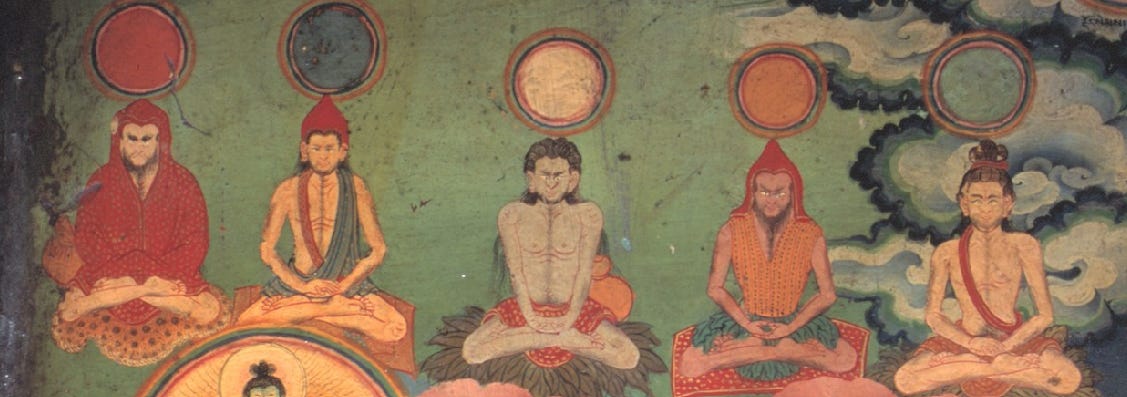
2. Upper Body: Straight Spine and Shoulders slightly drawn back
Maintain an upright spine, with the upper body neither inclining forward nor backward. The chest is open, and the shoulders are drawn slightly back.
3. Hands: Dhyāna-mudrā (Mudrā of Equipoise)
The hands are placed in dhyāna-mudrā, held approximately four finger-widths below the navel. The right hand rests upon the left, with the palms facing upward, and the thumbs lightly touching or gently pressing against each other.
4. Neck: Slightly Bent
The chin is gently drawn towards the chest, applying a slight pressure at the throat (larynx), while the back of the neck remains extended.
5. Tongue: Resting against the palate
Rest the tip of the tongue against the palate. In some yogic practices, this is said to help draw down the nectar (amṛta) from the small tongue.
6. Eyes: Gaze at the Tip of the Nose
Keep the eyes open and steady, with the gaze directed towards the tip of the nose. The gaze should be relaxed and unfocused, extending only a short distance, traditionally described as about the length of a yoke.
Note: This posture is at times described as the sixfold posture of Vairocana, reflecting the enumeration of six components.